Building an Aesthetic Questionnaire
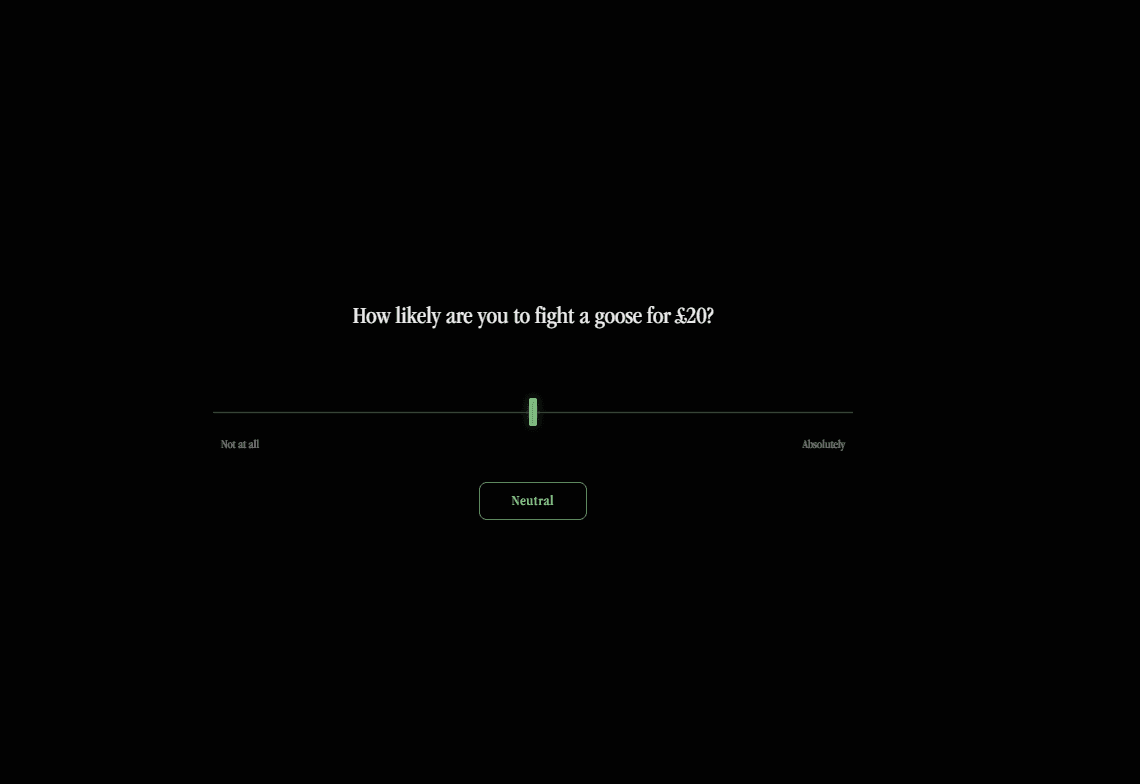
I built a questionnaire webapp in Next.js. The goal was simple: make it feel like it is actually alive. Not a boring form with radio buttons, but something that reacts to you, has opinions, and is a little fun to use. It has around 14 questions right now and it is hosted here.
Where the idea came from
I was replaying The Stanley Parable and stumbled into its weird questionnaire section. Something about that stuck with me. So I wanted to build one that felt like that, simple on the surface but with a personality underneath it.
When you drag a slider, the label text scrambles. The sounds shift. Small things, but they make the whole experience feel like it notices you. That kind of detail is mostly invisible when it works and really obvious when it is missing.
Design
I used ITC Garamond throughout. It reads as both refined and slightly off, which felt right for a questionnaire that takes itself a little too seriously. I also added custom cursors, a diamond, a hexagon, tiny arrows. Nobody will notice but they made me laugh, and honestly that was enough reason.
How it is built
All the questions live in Supabase, so I can add new ones without touching the codebase or redeploying. There are eight question types, each with its own interaction pattern, but they all feel like they belong together. Getting the slider animations and sounds to run smoothly on mobile was the most tedious part by far.
At the end you can export your answers as a dark-themed PDF. Completely pointless. Very satisfying.
If you want a question added, just email me. I read everything.
What I want to do next
The part I find most interesting is turning this into an actual social experiment.
The idea came from a Veritasium video on overconfidence. Ask people simple factual questions, things like "Are there more stars in the Milky Way or more trees on Earth?" and after each one, ask them to rate how confident they are. The pattern that tends to emerge is that people who know less are more confident, while people who know more hedge a lot more. Which is uncomfortable but kind of fascinating.
This is more or less what the Dunning-Kruger effect is about. The funny part is that the Dunning-Kruger curve itself gets misrepresented all the time. The popular version floating around the internet is not really what the original paper showed.
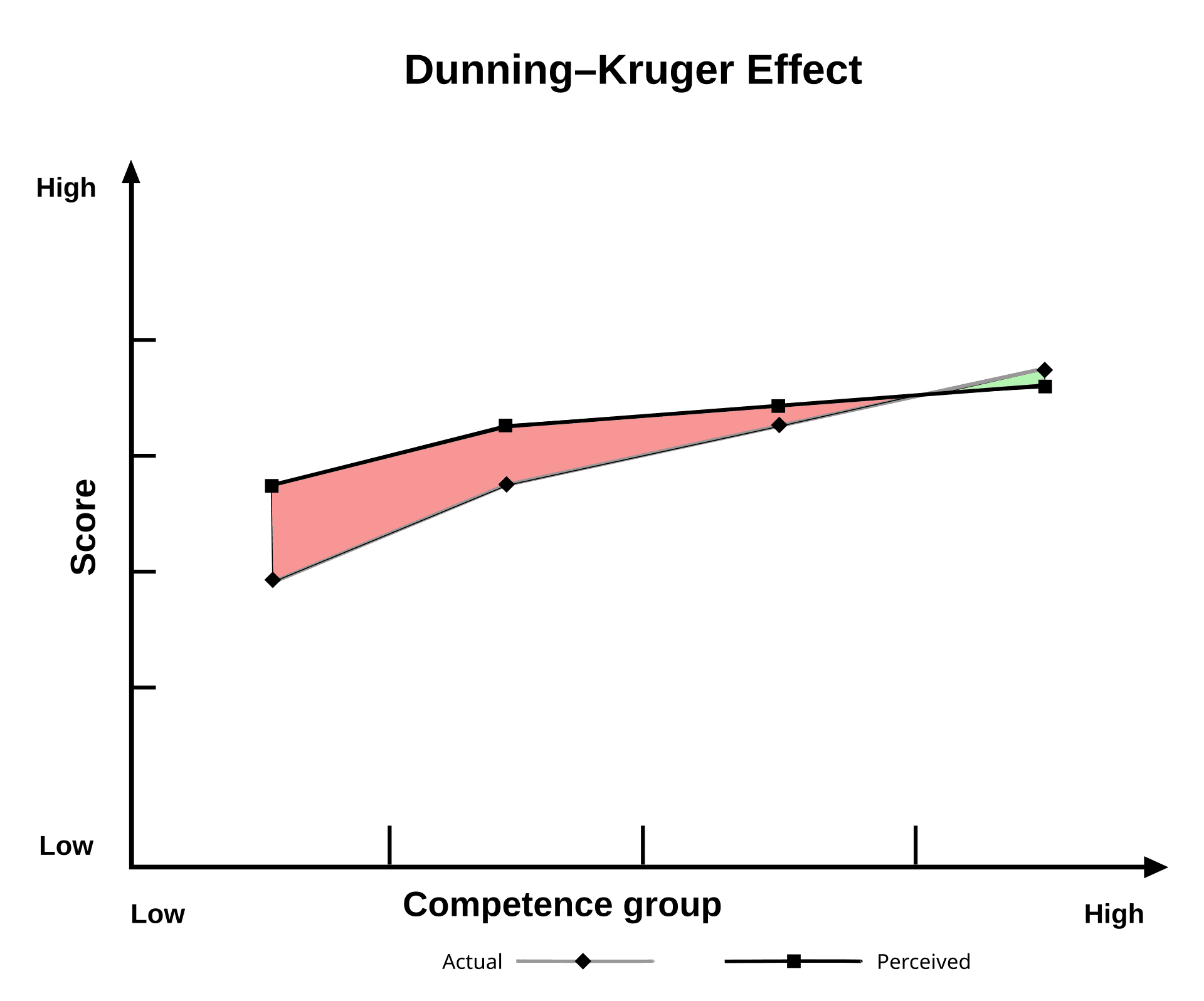

The goal is to recreate that gap between what people think they know and what they actually know, in a live setting with real responses. The questionnaire is a good vehicle for that. It already has the infrastructure, it just needs better questions and a results layer.
So yes, it started as a fun little side project. It might end up being something more interesting.
If this was worth sharing, send it to someone on 𝕏 or LinkedIn. Got a question or a thought? Drop me a message , I read everything. If this was worth your time, .